The couple on the bench and I didn't share a language. So I turned my camera around and showed them the photo I had just taken of them.

A man rides his bike past the old stone arches as the sun goes down.
What happened next changed the way I look at travel.
Leaving the crowds behind
I had spent the day around the Palatine Hill, which was packed with people. Later I headed out to the quieter southeast edge of Rome, to Parco degli Acquedotti, a park where the ruins of ancient Roman aqueducts run across open fields. I had my camera in hand.
The first person I noticed was a man, maybe in his mid 30s to 40s, riding his bike through the ruins of the park. The setting sun was behind the arches and lit him from the back. He looked completely at peace, and something about that drew me in. I took the frame and kept walking.
I traced the old stones with my fingertips as I went. They felt warm, almost alive. I kept thinking about the people who had walked these same paths centuries ago, living whole lives against these walls.
The bench
Then I saw them.
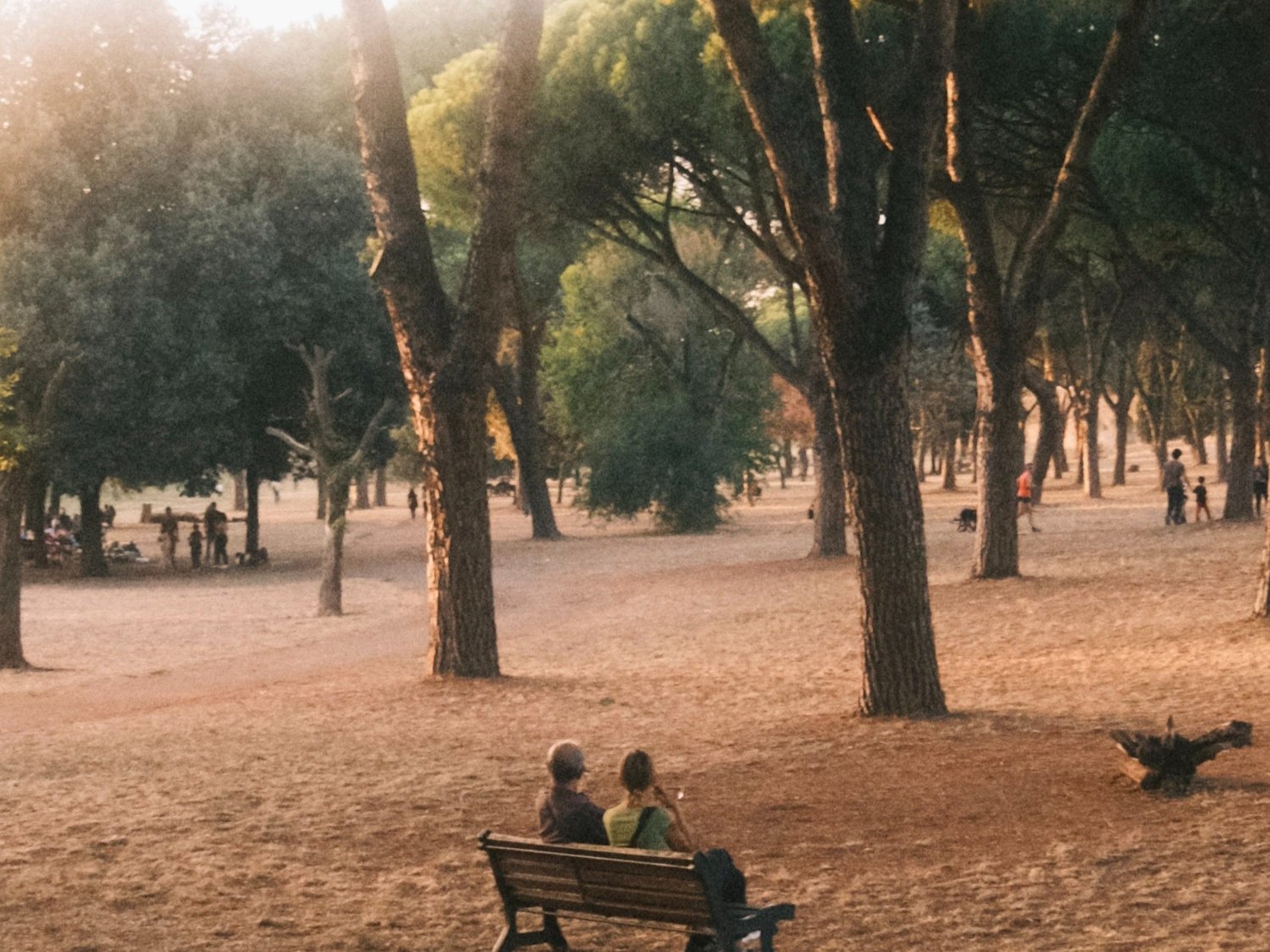
An elderly couple sat on a bench under a big tree, looking out over the open field. Light came through the leaves and pooled on the ground around them.
Her husband had been struggling with a hard cough, and the worry showed on her. Her face held a deep, quiet sadness, a life story written in its lines.
I didn't want to interrupt, so I stayed back and took one photograph.
Standing there, I found myself writing their story in my head. He had always been the strong one. He built their home, worked tirelessly for their family, and met every challenge with courage. Now she sat beside him on a park bench, still loving the same man as his body slowed him down.

An elderly couple on a park bench in the late sun, her worry for her husband quiet but visible.
When the language barrier disappeared
We couldn't really talk. They spoke a little Italianized English and pointed out the nicest spots around the park for a photo.
Then I showed them the picture I had taken of them, the same one you see here, the two of them on the bench from behind.
They looked at it for a while. Then, as they looked closer, their eyes lit up.
Nobody needed to translate anything. They saw themselves the way I had seen them a few minutes earlier, and for a moment we understood each other completely. That connection came from the simple act of seeing and being seen.
That's when it clicked for me. A photograph speaks the universal language of real human emotion, and anyone can read it.
Golden hour in the park
Further along, a middle-aged couple sat on another bench sharing a light snack. They watched the sun dip below the horizon as a soft orange light settled over the park. A comfortable silence sat between them, and I felt a pang of longing watching them.
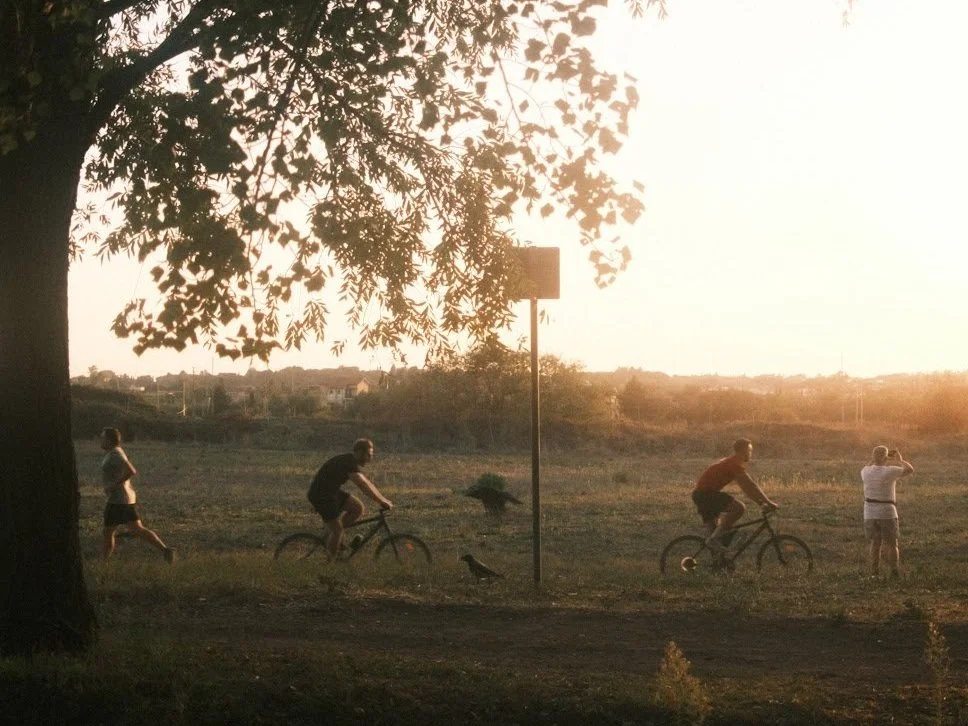
All around them, the park kept moving. A runner went by. Two cyclists rolled past. A man in a white shirt stood in the field, facing the light with his hands raised to his face.
In one park, in one evening, I saw sadness, joy, love, and everything in between. The Rome most visitors see has the grandeur. This quiet corner of it gave me the raw, unfiltered version of people, and that's what stayed with me.
There's a word on our Our Story page that I think about a lot: sonder. It's the realization that every passerby is living a life as vivid and complex as your own. That evening, every bench in the park held one of those lives.
Behind the scenes: how I photographed strangers without breaking the moment
A few things I did that evening, and still do whenever I'm photographing people I don't know:
Stay back. Most of these frames were taken from a distance, several from behind. Nobody had to stop what they were doing or perform for me.
Shoot toward the light. The low sun behind the trees and arches is what gives every frame here its haze and glow.
Leave room for the place. The arches, the pines and the open field are part of each story, so the people stay small in the frame.
Show people their photo. With the couple on the bench, that turned out to be the best part of the whole day.
Every photo in this post was shot on a Fujifilm X100V.
Want photos that feel like this?
If this post makes you want a session with the same feeling, here's what helps:
Plan around the last hour of light. Almost every image in this post was taken as the sun was going down.
Pick a place with texture or history. Old stones, big trees, a quiet park. The setting becomes part of your story instead of a backdrop.
Do something real together. Share a snack, sit on a bench, ride a bike, talk. We'll guide small, natural moments, like whispering a joke to your partner or watching the sunset, so the photos feel like you and not like a pose.
Wear soft, natural colors. Muted tones and simple textures sit well with warm light and stone, like the soft green shirt and light trousers in the photo below.
We photograph couples here in Los Angeles and travel and elopement sessions further from home. You can see current options and pricing on our Session Experiences page.

A quiet street nearby, a teal vintage car, and a warm afternoon worth stopping for.
Leaving the park
Leaving that park felt like losing a hidden gem I was meant to find. I walked away with a new appreciation for travel, less for the destinations themselves and more for the stories they hold.
My photographs from that day are fragments of those stories, the whispers of the stones and the echoes of us. Even in the most out-of-the-way corners of the world, we're connected by the shared experience of being human. Framed by fall leaves and ancient stones, it all looked so beautiful.
If there's a place, a person, or a quiet moment you'd like to hold onto, we'd love to hear about it. Tell us about your session or email us at info@seekingworlds.com.